Every Sasquatch install contributes to a monthly restoration commitment we hold with veritree: 500 post-wildfire trees planted in British Columbia and 1,000 kelp strands planted along the BC coast, ordered quarterly, regardless of how many heat pumps we sell in any given month.
At our typical install volume, that averages out to roughly 30 trees and 60 kelp strands per install. Here is what it actually is, why we structured it this way, and where the receipts live.
The “we care about the environment” line is doing a lot of work in HVAC
Every HVAC company in BC now claims environmental credentials. Most of it is one of three things: a carbon offset purchased from a broker, a donation to a general environmental charity, or a vague statement on the “About Us” page with a green leaf next to it.
We wouldn’t do any of those. Here’s why.
A carbon offset from a broker is a paper credit. You buy the right to say you offset one tonne of carbon; somewhere in the world, in theory, a tonne of carbon isn’t emitted (or is sequestered) because of your money. The offset market has been repeatedly shown to over-count, double-count, and sell credits for projects that would have happened anyway. It is not that all offsets are fraudulent — some aren’t — but a paper credit alone tells you nothing about what actually happened in the ground.
A general environmental donation is fine but disconnected from the work. There is no way for anyone to see what a specific project contributed to.
A statement on the About page is worth exactly what it costs to write.
We wanted our environmental contribution to be a specific, verifiable, per-month thing — with numbers we could point to and update over time. That’s where veritree came in.
Verified restoration is not the same as a carbon offset (a distinction that matters)
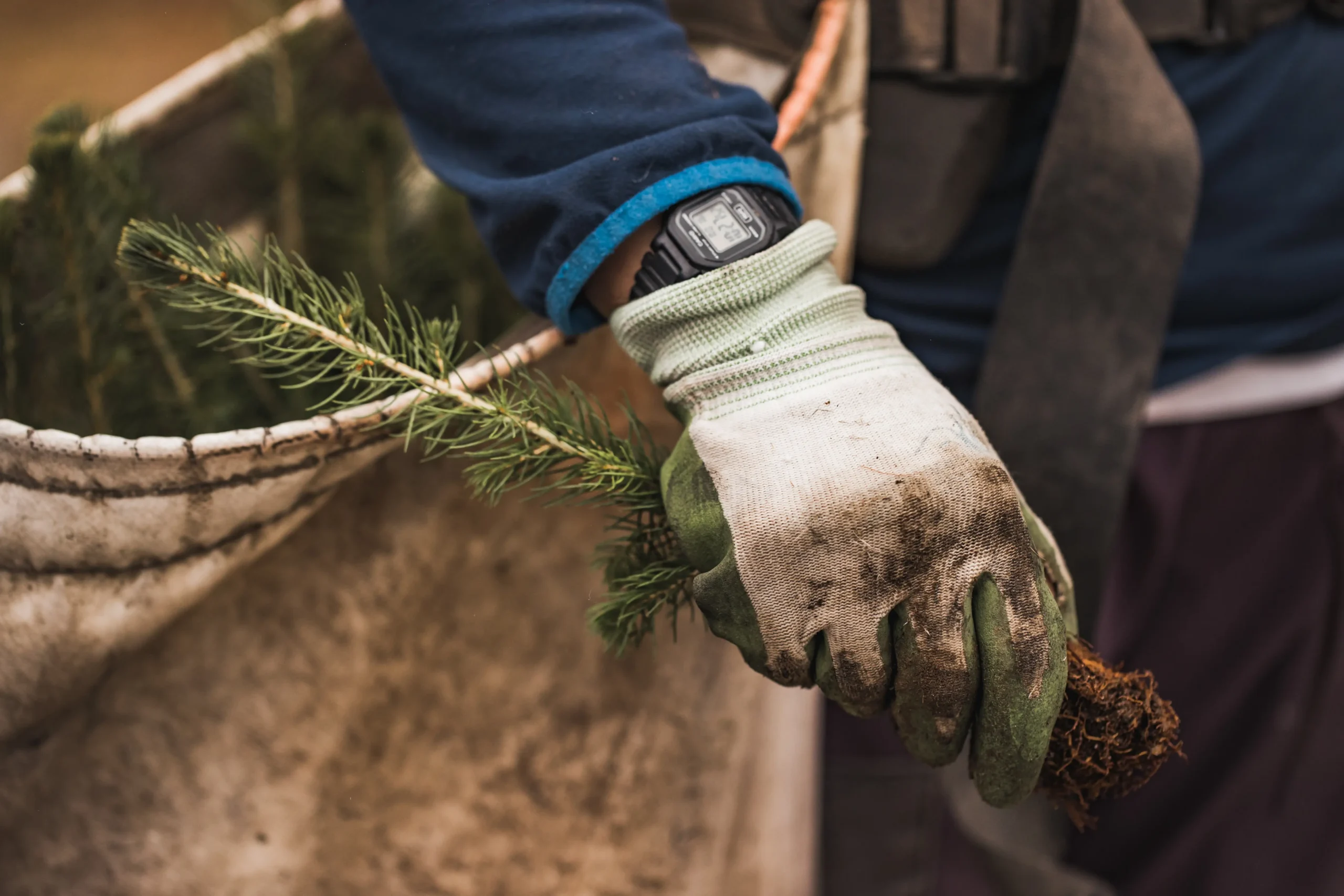
This is a distinction veritree is careful about, and one most HVAC websites blur. veritree’s core work is not selling carbon credits. It’s putting trees and kelp physically in the ground and in the ocean, geo-tagging each site, and monitoring survival over time. Verification runs in three levels: the planting crew logs each site through a purpose-built app; site leads audit the data on the ground; and veritree’s team runs a final check using machine-learning tools on the submitted evidence.
What you get out the other end is not a tradeable carbon unit. It is a specific patch of restored land or ocean, tracked, with survival monitored across years.
We do not claim our sponsorship makes Sasquatch “carbon neutral” or “net zero.” Those claims require certified carbon credits under a recognized standard, and we haven’t purchased those. What we can honestly report is what the trees and kelp are projected to sequester as they mature — which as of today is around 28,383 tonnes of CO₂ at maturity, roughly equivalent to taking 6,170 gas-powered cars off the road for a year.
That’s an estimate, not a certified offset. veritree calculates it from academic sequestration averages for the species and regions planted. We call it what it is.
What our sponsorship actually funds
Sasquatch’s monthly commitment to veritree funds two specific restoration programs:
- Post-wildfire reforestation in British Columbia. After severe wildfires, natural recovery can take decades or fail entirely — some post-fire landscapes get taken over by shrubland instead of coming back as forest. These projects reintroduce native tree species chosen for the region, and rebuild forest structure and soil stability where BC’s fire seasons have hit hardest.
- Kelp seaforestation along the BC coast. Kelp forests are the underwater equivalent of old-growth — they anchor marine biodiversity, and they’ve been dying back along the BC coast for decades because of climate change. veritree’s kelp projects restore bull kelp and sugar kelp species along the West Coast of North America, the same ecosystems that support salmon runs and the food chain our commercial fishery depends on.
How the ordering actually works
Some sponsorship programs pitch a per-transaction trigger — “every purchase plants a tree.” That model is designed for marketing more than for restoration; it makes tree-planting look reactive to buyer behaviour instead of a real long-term commitment.
Ours doesn’t work that way. Every quarter, veritree ships a fixed order into our sponsorship account: 1,500 post-wildfire trees + 3,000 kelp strands — the sum of three months at 500 trees and 1,000 kelp. We fund the same volume in a busy quarter and a slow one. The trees and the kelp go in either way.
At our typical volume of around 200 installs a year, that works out to about 30 trees and 60 kelp strands per install. Life-of-partnership total so far: past 30,000 trees and 23,700 kelp strands — tracked live on the Impact Hub.
The current totals, live
All of these figures come straight from veritree’s public Impact Hub for Sasquatch. Numbers update as new orders are placed and new plantings are verified in the field.
- Total committed: over 53,000 trees and kelp strands
- Total verified in the ground / ocean: 49,338
- BC Post-wildfire trees: 30,000 ordered / 28,500 verified planted
- BC coastal kelp: 23,700 ordered / 20,700 verified planted
- Projected CO₂ sequestration at maturity: ~28,383 tonnes
The live dashboard is at impact.veritree.com/sasquatchheatpumps. No login. No account. Open to anyone who wants to check the receipts.
Why we care about the coast
We’re family-owned and Island-grown. The Island isn’t an abstraction for us. Every Sasquatch on the crew lives on the coast we’re trying to keep intact. Kelp forests dying back along the BC shoreline. Wildfire recovery in BC’s interior. Restoration projects wherever veritree can put verified work into the ground.
Every heat pump we install is a small energy-efficiency win in one home. The monthly veritree sponsorship is what makes each install a contribution to the ecosystem beyond that.
What to expect on an install
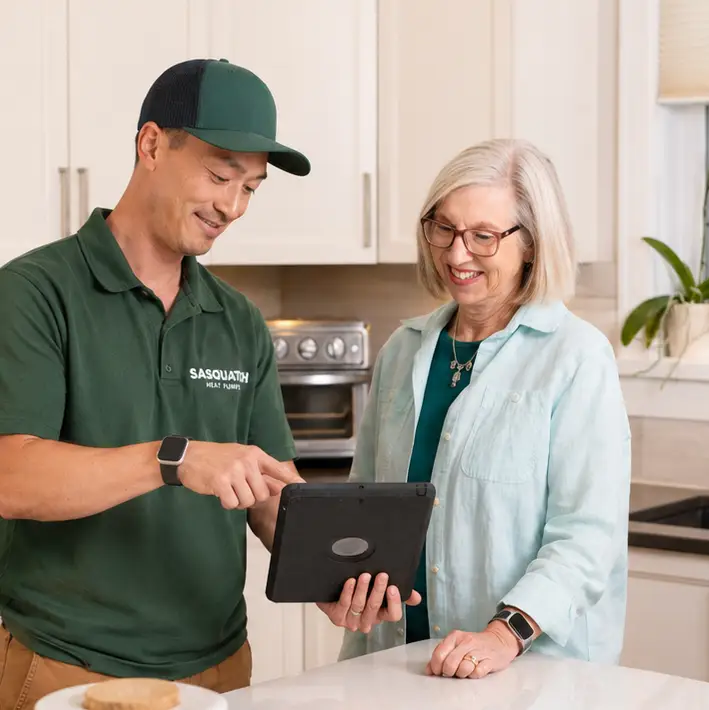
We come to your home, walk the space, and put together a written quote. When the install happens, it becomes part of the year’s worth of business volume that our monthly sponsorship rides alongside. If you want to see the running totals, the Impact Hub link above is public.
Family-owned. Island-grown. 4.9 ★ Google Rated across the Island.
If you’re considering a heat pump and want to talk it through, call (236) 361-8293 or reach us through our contact page.
— The Sasquatch Field Team